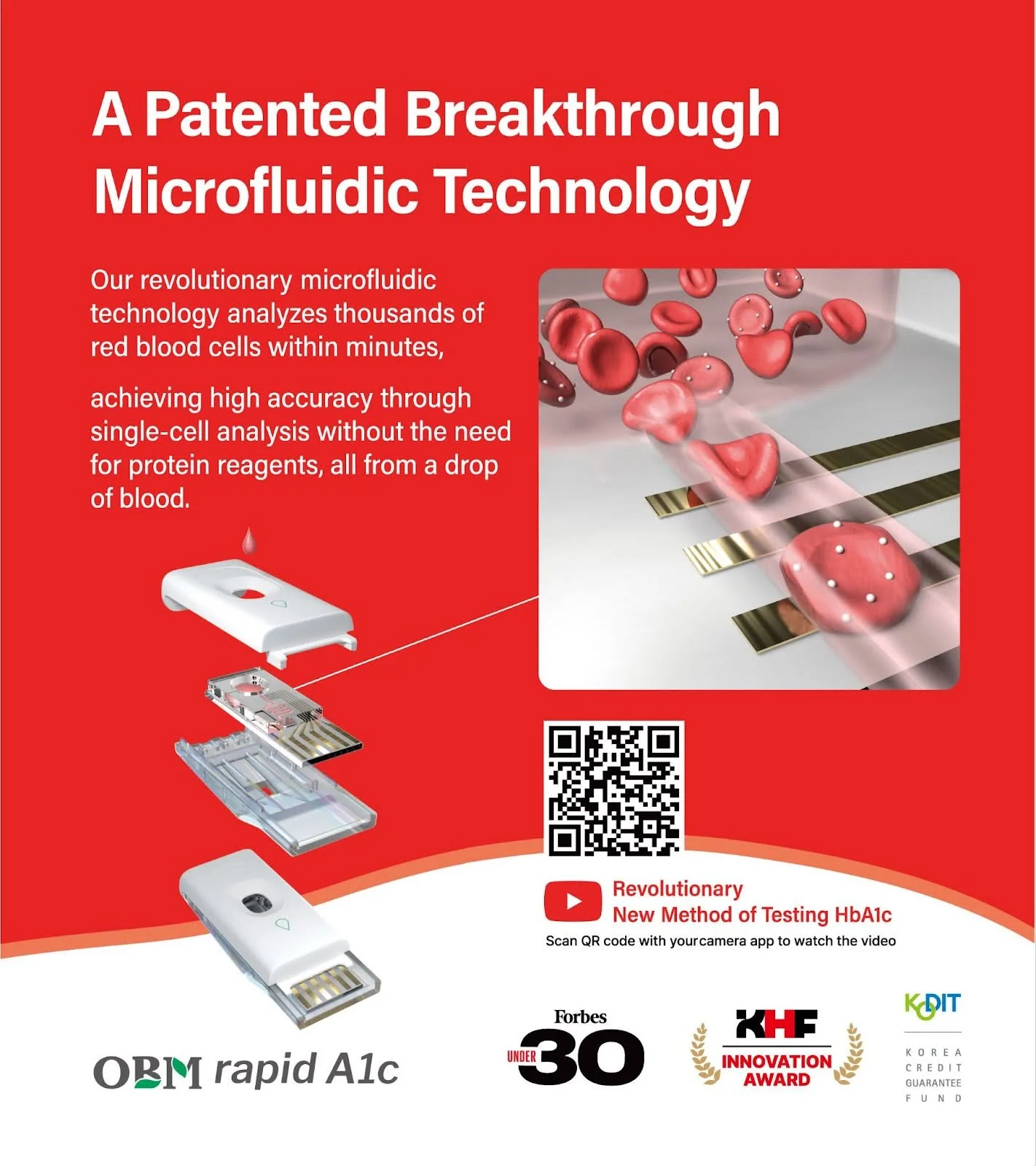
Microfluidic technology makes it possible to perform complex lab tasks on a chip-sized device, often referred to as a “lab-on-a-chip.”
Novel medical technologies using microfluidics process tiny amounts of fluid—often just a drop—through networks of ultra-fine channels, ranging in size from the width of a human hair to even smaller than capillaries, extracting rich biological information from minimal samples.
These chip-based systems analyze blood or other biological samples quickly and efficiently, enabling real-time analysis.
Unlike traditional lab equipment, which can be bulky and slow, and require large sample volumes, microfluidic devices can be designed to be more compact and efficient, enabling faster diagnostics with minimal sample requirements.